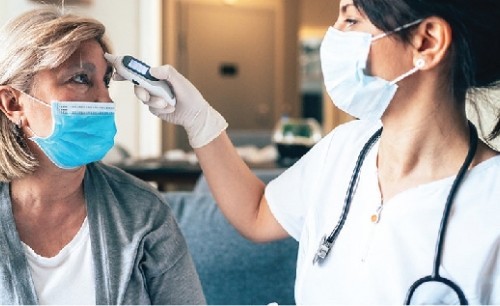
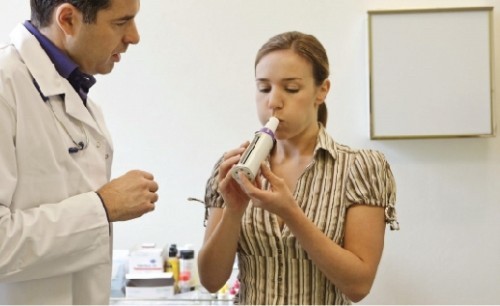
Over the past few months, we have seen an increase in queries on Peak Flow Meters from clinicians and healthcare professionals. This may be because, during the current Covid-19 pandemic, patients with asthma and other respiratory conditions are being increasingly managed via virtual or phone consultations and have had to take more responsibility for self-care and management of their condition.
Read More >
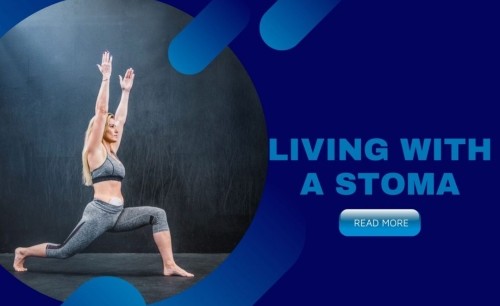
One in 500 people in the UK live with a stoma. Up to 85% of ostomates have experienced common problems such as skin irritation, blockage, leakage, and difficulty attaching and removing appliances, but many do not seek professional help1. One study identified that approximately one third of patients with a stoma who were followed up over a 5-year study period had evidence of skin complications within 90 days of surgery2. This, in turn, leads to increased healthcare costs, increased product use, wastage and unnecessary referrals to specialist stoma services.
Read More >
Part of our Heroes Campaign. By Colin McAlpine – Bestwood Village, Nottingham Postman. For me as a Village Postie, I became acutely aware of the changes to people’s routines as soon as the Schools closed. There was a lot of uncertainty and confusion for everyone leading up to Lockdown but there was also a bonding together, a solidarity if you will, from an unexpected source. It came from the youngsters in the form of the Children’s Rainbow.
Read More >
Understanding incontinence. Incontinence is the unintentional leakage of urine, faeces, or both. Studies indicate that there are between three and seven million people with some degree of urinary incontinence in the UK. Prevalence of both urinary and faecal incontinence increases with age.
Read More >
It is estimated that 13,500 people have stoma surgery each year, which means around 1 in every 500 people have a stoma in the UK.1 Due to this high number of people, nurses in different clinical settings will see patients with a stoma. Therefore it is vital to develop a basic understanding of stoma care.
Read More >
Part of our Heroes Campaign. By Dr. Dan O’Carroll – A&E Consultant, Birmingham. As the first wave of the corona virus pandemic appears to be easing, it’s worth reflecting on what the NHS has managed to achieve in such a short space of time.
Read More >
Part of our Heroes Campaign. By Dr. Nitin Raje-Ghatge – MD, DMLS, DFMS (London). I have come across a vast number of people with Mental Health & Addiction problems and how it affects not just the patients but also the people they live with.
Read More >
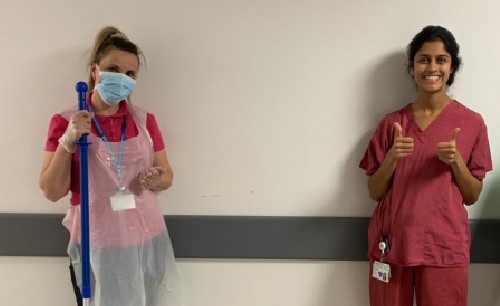
Part of our Heroes Campaign. Maria & Aisha’s Story. This is Maria (left) and Aisha (right). They work on the Haematology Ward in a NHS hospital. Maria who is from Poland, is a cleaner and Aisha is a junior doctor. Maria is 4 months pregnant and continues to work in areas that are low risk for COVID-19.
Read More >
Appropriate treatment of moisture-associated skin damage (MASD) has long been hampered by the lack of simple and practical classification tools. We believe that the S.M.A.R.T. resource provides an appropriate treatment regime for moisture-associated skin damage (MASD).
Read More >
Part of our Heroes Campaign. By Jackie Pearson, Shepperton. Here we are in early May 2020 in the middle of the COVID-19 pandemic, shortly after the Brexit debacle that went on for the last 3 years. I won’t ponder on this as my article is not meant to be political, but recent history and austerity have undoubtedly played a role! Make of that what you will.
Read More >"The S.M.A.R.T. card is easy to use very clear and is a great reminder for which product to use and when."
Sandi Sherman, Care supervisor from Bluebird Care, Devon.
"The introduction of S.M.A.R.T. has supported our nursing staff by providing a clear but straightforward tool to help them identify moisture associated skin damage, establish the severity and manage it using an appropriate barrier product. For patients this support offers the benefit of early intervention in preventing and managing what can be a debilitating problem"
Pia Prince, Tissue Viability Nurse Specialist, University Hospitals Plymouth.

"I was able to watch the presentation on moisture damage a few weeks ago and found out about the S.M.A.R.T cards I have since received mine and have shared the information with the community continence team. This is an easy to use and store (in my work bag) so I can share information with patients (where suitable) and primary care givers to ensure the most suitable products are being used for patients with moisture damage to prevent severe skin damage. I have not had to use it in this way yet but it is helpful to have as easy access."
Doreen White, Tissue Viability Support Nurse, Livewell South West, Plymouth.
“We use the Medi Derma- S Film and Cream and the Medi Derma-PRO products and we've had some really good results on patient skin with using those. Medicareplus Intl. have supported us when we launched the products on 12 formularies and provided a lot of education to clinical staff both in the community and in the hospital.”
Debbie Houghton, Tissue Viability Nurse for South Tyneside and Sunderland NHS Foundation Trust.
“The SMART card allows staff to be proactive in commencing the right treatment for their patients in promoting skin integrity. As it is on a wipe able card, staff can easily refer to it in their clinical area, thus avoiding any delays in starting the appropriate skin care regime.”
Annemarie Graf, TVN Specialist Nurse, UHBW NHS Foundation Trust (University Hospitals Bristol and Weston).

We aim to manufacture innovative economic, patient centric solutions for chronic conditions that improve quality of life, whilst helping clinicians around the world improve clinical outcomes.